Search This Blog

Wednesday, June 15, 2011

My Favorite Books at Age 24

It's my 24th birthday today, and in honor of that fact I wanted to write about my all-time favorite books, the ones I try to answer with whenever anyone asks me the dreaded question, "What's your favorite book?" I hate that question because I love all kinds of books but when I answer with just one favorite, I feel like the person asking me pigeonholes me by my answer. I try to give at least a couple favorites so I'm not just the girl who likes to read middle-grade books. And with that, I give you my top favorite book:

The Phantom Tollbooth

I can't tell you how much I love this book. I've read it so many times and I feel like each time I read it I catch something new. The puns, the plays on words, the literal interpretation of phrases... I love it all. I think everyone should read this book.

Anne of Green Gables Boxed Set (Anne of Green Gables, Anne of Avonlea, Anne of the Island)

The Anne of Green Gable books were probably the first "adult" books I read as a young girl. I have the boxed set of all eight books and they are falling apart from how often they've been read. They are amazing and that's all I can say.

The Curious Incident of the Dog in the Night-time

Aside from the awesome cover, I love this book because it's so different from everything else. Reading from the point of view of an autistic teen really helped me understand autism a little more and feel for the parents of autistic children. I've read this book several times (in fact I reread it on my 18th birthday) and it brings me to tears every time.


If you had just told me what this book is about, I would not have been interested in the slightest. Luckily, someone gave it to my younger brother when I was about eleven and of course I went snooping around his bookshelf. I'm so glad I read it because I think it's one of the most beautiful books I've ever read. It's the book that inspired the movie October Sky.


Yes, I'm one of those people. But I really do love this book (and I like 1984, but not nearly as much). I love the creation of new worlds and this one is pretty fascinating. I've read it multiple times (in high school, college, and when I was student teaching in high school) but I still get excited about it every time.

The Chronicles of Narnia (#1-7)

My parents read all of these books to my brother and me when we were younger and I've read them on my own several times since. Once again, I love fantastical worlds and strange places and the Chronicles has them in spades. My favorite (and my mom's least favorite) is The Magician's Nephew because there are multiple worlds!

Whale Talk

I love this book, plain and simple. Male point of view, swimming, high school, diversity... I recommend this book to everyone. I love all of Chris Crutcher's books (how could you not like Staying Fat for Sarah Byrnes?) but this one is by far my favorite.

Will Grayson, Will Grayson

Duh.

Going Bovine

So weird. So good. I can't even try to describe this one to people without sounding crazy, but it's awesome. And I love how long it is because it just keeps getting crazier! I love me some contemporary magical realism.
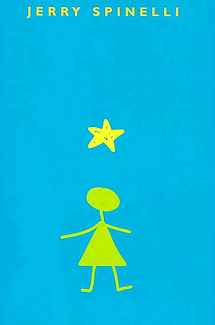
Stargirl by Jerry Spinelli Free Online Summary Study Guide

One of my absolute favorite covers. How could I not include this book? It's beautiful and sweet and Jerry Spinelli! Everything he writes is wonderful but Stargirl is the best. I got my brother to read it when he was in college and he loved it too. The story is perfect for all ages.

I already knew this, but it's interesting to see it laid out like this: I generally prefer male authors over female. Some other favorites that I love but didn't quite make the top ten: The Monstrumologist by Rick Yancey, Lullaby and  Invisible Monsters by Chuck Palahniuk, Friday Night Lights by H.G. Bissinger, Tangerine by Edward Bloor and What's Eating Gilbert Grape by Peter Hedges. I'm also always adding to my list of "new favorites", or the books I recommend to people as soon as I finish reading them. North of Beautiful by Justina Chen Headley is a new favorite, as well as Nothing by Janne Teller. They stuck with me.

Yay for books!

Monday, June 13, 2011

Sean Griswold's Head by Lindsey Leavitt


What it's about (from Goodreads): According to her guidance counselor, fifteen-year-old Payton Gritas needs a focus object-an item to concentrate her emotions on. It's supposed to be something inanimate, but Payton decides to use the thing she stares at during class: Sean Griswold's head. They've been linked since third grade (Griswold-Gritas-it's an alphabetical order thing), but she's never really known him.

The focus object is intended to help Payton deal with her father's newly diagnosed multiple sclerosis. And it's working. With the help of her boy-crazy best friend Jac, Payton starts stalking-er, focusing on-Sean Griswold . . . all of him! He's cute, he shares her Seinfeld obsession (nobody else gets it!) and he may have a secret or two of his own.


What I learned: First of all, let me just say that the boy pictured on the cover is not Sean: in the book, his hair is clearly and repeatedly described as so blond it's almost white. Boy on the cover: not Sean. 
Anyway... it's interesting to me how a fair number of YA books have a main character who goes to some kind of counseling or therapy. I think it's great because I know that it's definitely helpful to some people, it's just something I never really thought about in a book. I also like how Payton is not Caucasian but it's not part of her "issue" in the book. It's just who she is and it's not a big deal.
I thought this book did a great job of showing how a girl who just found out her father had an incurable, progressive disease would react. I completely understand ignoring, being mean to her parents and causing other discipline problems instead of having to face the real problem: her dad's multiple sclerosis. I can't imagine how hard it would be to deal with that kind of sickness in your father, the guy a lot of people look up to as strong and steady.
I learned that there's sometimes not a "right" thing to say. There are awkward moments everywhere: talking to your boss, your significant other, your best friend, your crush, your mom, your dad... the list goes on. Sometimes it's inconsequential or funny and other times it's completely serious and you just don't know what to say. I often feel like other people know just what to say to make a situation better and it's just a skill I lack, but I really think that every single person has those moments. Sometimes there really isn't anything to say to make it all better, or understood, or right. Sometimes you just have to fight through the awkward or hard times until it gets easier. It's ok to not have all the answers and to need someone else's help, whether it's a friend, counselor, family member or therapist.

If you've read Sean Griswold's Head, what did you learn? Do you wish you always had the right answers?

Friday, June 10, 2011

The Market by J.M. Steele

The Market

What it's about (from Goodreads): High school senior Kate Winthrop is about to find out just how much she's worth.

After stumbling across the Millbank Social Stock Market, Kate is horrified to discover that out of the 140 girls in her class, she's ranked a bleak 71. Sure, she's not drop-dead gorgeous, and her "fashion" choices leave a bit to be desired...but 71?! Determined not to accept her fate as a "junk bond," she and her best friends quickly set out to make her the fastest rising stock on the Market.
Armed with a sexy new haircut and killer wardrobe, Kate puts her plan into effect — and the analysts take note. In a matter of weeks, her stock value soars, and "Blue Chip" status is within reach. But what begins as a fun social experiment quickly turns into an obsession, one that threatens to ruin her reputation, friendships, and a chance at first love. Will Kate survive the highs and lows of the Market, or will her security crash and burn?

What I learned: I think it's pretty obvious what the authors wanted the reader to learn: popularity isn't all it's cracked up to be. Yeah, yeah, we get it. Almost every contemporary YA book has that message somewhere in it and we all know cerebrally that it might be true but I think a lot of us (myself included, at times) still wish we were popular.
I really liked the premise of this book but I wish it were better written. I think it could've been taken a bit further with the stock market angle and fleshed out more there. I never knew who was running the Market and how the girls paid (or who they paid) and I wanted to know more about it.
When my brother was in junior high, a list went around the school of the ten hottest guys in the seventh grade. (There may have been a similar list for the girls, but I only heard about the boys since I have a brother.) My brother was on it and it actually really upset him. He didn't want to be seen like that or get the kind of attention it brought him. I remembered that list from over ten years ago while reading this book and it made me think about my need to rank people. 
I have a horrible, almost automatic habit of mentally ranking the attractiveness of everybody in the room, wherever I am. Sometimes I put myself in there (and I'm brutally honest, usually placing myself in the middle or bottom third, but sometimes near the top) but I usually don't. I have no idea why I do this, though it's probably just an easy way for me to classify people, or put them in boxes so I think I understand them better (though of course that's not true at all). I've always known that it's a very bad habit but this book really made me think how negative the consequences can be. Ranking people by attractiveness doesn't help anyone and it usually hurts almost everyone. Nothing good can come out of it. I cause myself to think wrongly about people and even though no one knows I'm doing it, it's still not right. It's definitely something I'm going to be working on, thanks in part to this book.


If you've read The Market, what did you learn? Will anyone else admit to silently ranking people?

Friday, June 3, 2011

Beauty Queens by Libba Bray

Beauty Queens

What it's about (from Goodreads): From bestselling, Printz Award-winning author Libba Bray, the story of a plane of beauty pageant contestants that crashes on a desert island. 
Teen beauty queens. A "Lost"-like island. Mysteries and dangers. No access to email. And the spirit of fierce, feral competition that lives underground in girls, a savage brutality that can only be revealed by a journey into the heart of non-exfoliated darkness. Oh, the horror, the horror! Only funnier. With evening gowns. And a body count.

What I learned: Libba Bray writes my kind of humor. I love the snarky bits, the making fun of reality TV, the industrialization of EVERYTHING, the beauty product commercials. It's laugh-out-loud funny and I hardly ever laugh out loud at books. I'm a little ashamed to admit that I would watch some of the reality shows mentioned in the book. They are so over the top yet not that far from the current line-up on some networks (ahem, TLC and MTV. WHAT ARE YOU DOING?!). I love how Ms. Bray both makes the obsession with reality TV hilarious and a little shaming at the same time. You don't want to admit that it's fascinating to watch other people go through incredibly strange and weird things, but you do anyway.


I went into this book without having read a single thing about it: I hadn't read the summary on Goodreads or even the inside of the front flap! I knew I would love the basic premise and I wanted to be completely surprised by everything, which is almost impossible to do now that almost every book I read has been reviewed (at least once) by any of the myriad book blogs I follow. 


(SPOILER SECTION, highlight to read)
I loved the story of the beauty queens but was less enamored of the pirates and their ridiculously fake reality show. I kind of felt that the pirates were just thrown in there so the book could have some romance since it's a teen book and every YA book has romance in it. I'd actually like to read a book sometime that has hardly any or even none. The Corporation and MoMo B. ChaCha stuff was entertaining but again I almost would have preferred the whole book just to be about the beauty queens. It would have ended up being a completely different book, but that's my opinion and I'm sticking to it. I loved that MoMo B. ChaCha was obviously a caricature of Kim Jong Il (who, if you don't think about it too much, is hilarious if you read about him). I didn't see the need for ChaCha and Ladybird's relationship and some of the details at the end of the book were hard for me to picture (like how the stage was set up in relation to the compound in the mountain and ChaCha's boat... it was all a bit confusing for me). I also wasn't a fan of how Taylor just went crazy after getting shot with the tranquilizer darts. It seemed like a strange way to kind of get her out of the main action.


Anyway, what I learned from this book...epilogues can be great. I loved this book's epilogue though I have generally hated others in the past (Harry Potter and Mockingjay, anyone?) It was actually one of my favorite parts and I loved seeing where all the beauty queens ended up. Obviously this whole book is a little far-fetched and full of fantastical things (which I generally love) but I do wish more of the book had just focused on the beauty queens and their survival on the island (still interspersed with commercials, of course, because I loved those!). I love how Bray made you think about feminism and femininity and self-sufficiency without making you feel hit over the head with a lesson. I also thought about the way advertising is so sneakily ingrained in our lives and how it's almost impossible to escape. I definitely want to be more careful about noticing what the world tells me I should wear, drink, eat, like, do and enjoy, instead focusing on what I really want to wear, drink, eat, like, do and enjoy.

Wednesday, June 1, 2011

Miles from Ordinary by Carol Lynch Williams

Miles from Ordinary

What it's about (from Goodreads): Thirteen-year-old Lacey wakes to a beautiful summer morning excited to begin her new job at the library, just as her mother is supposed to start work at the grocery store. Lacey hopes that her mother's ghosts have finally been laid to rest; after all, she seems so much better these days, and they really do need the money. But as the hours tick by and memories come flooding back, a day full of hope spins terrifyingly out of control....


What I learned: While it started out a little slow, once I got into it I could not put this book down. I stayed up late to finish it because the story sucked me in and I had to know what happened next. I love books that take place during a relatively short amount of time and this one did not disappoint. By the time Lacey leaves the library I couldn't read fast enough. I wanted to devour the words so I could know what was going to happen. I was by turns scared and curious. Actually, I'm not going to lie: there were a few pages that had me scared enough that my heart was beating faster than normal. I also love books where I can't necessarily tell what is actually happening and what is happening in the mind of the main character and I got that from Lacey and her mother. I like a little confusion when I read, apparently.


This book is intense. I couldn't help but think of Holly Schindler's A Blue So Dark while reading it, since they both have themes of moms with mental illness but this book takes it further and scarily deeper. I seem to keep picking up books with some kind of mental illness in them but this book is different. It shows exactly what it's like for a person when she is the only one dealing with someone who has an illness. It made me, once again, realize that there is no way that you can know what is going on in someone's life and what they're dealing with at home. Lacey mentions that she gets made fun of at school for the one time her mom showed up disheveled, asking Lacey where she put her medicine. I know I often laugh uncomfortably when I see someone acting strangely but I wouldn't laugh at someone who was obviously physically ill. Mental illness is exactly like a physical disease except it manifests itself differently and it is in no way funny. In some ways it's more frightening than being physically sick because it can alter someone's entire personality. I definitely want to read this book again at a slower pace now that I know what happens and see what else I glean from it.


If you've read Miles from Ordinary, what did you learn? Did anyone else get scared at some points?

Tuesday, May 31, 2011

Other Words For Love by Lorraine Zago Rosenthal


Other Words for Love

What it's about (from Goodreads): When an unexpected inheritance enables Ari to transfer to an elite Manhattan prep school, she makes a wealthy new friend, Leigh. Leigh introduces Ari to the glamorous side of New York--and to her gorgeous cousin, Blake. Ari doesn't think she stands a chance, but amazingly, Blake asks her out. As their romance heats up, they find themselves involved in an intense, consuming relationship. Ari's family worries that she is losing touch with the important things in life, like family, hard work, and planning for the future.

When misfortune befalls Blake's family, he pulls away, and Ari's world drains of color. As she struggles to get over the breakup, Ari must finally ask herself: were their feelings true love . . . or something else?


What I learned: This book is beautifully written and opened my eyes to how some people experience their teen years. I was lucky(?) enough to be the oldest child in my family and therefore never had to live up to an older sibling's high standards or make up for his or her downfalls. I hope my brothers and sister don't feel that way about me (I'm pretty sure they don't, in either case) but I can't imagine what it would be like to know that your parents feel that your older sister didn't exactly grow up the way they had hoped so now you had to fulfill their dreams. I think it would be terrible. You would have to balance your relationship with your sister and your relationship with your parents while at the same time navigating high school with its myriad of relationships to balance. 


I have been extremely blessed in life to be naturally resilient to life's hardships. Granted, I haven't experienced much true hardship, such as a death in my family or friends, but there have been a few rough spots, as there are in anyone's life. It doesn't have to be something huge to affect you, though. Ari has to deal with her older sister's post-partum depression, her best friend's betrayal and her boyfriend breaking up with her. None of these things are horrific and too much for any teenager to deal with, but it's hard - and probably not right - to judge the "difficulty" of incidents in people's lives. I definitely got upset after one rough break-up in college and cried at least once a day for more than a month, but I could always suck it up and go to work or class. I wasn't the most fun person to be around, but I wasn't in need of a doctor. But just because I can deal with life's difficulties without needing extra help (knock on wood) doesn't mean that other people can. Ari struggles with depression, as do a fair number of teens and adults, for a number of reasons. I thought this book was extremely well-written and the most realistic depiction of a teenage girl I've read in a long, long time. I can very clearly see any teenage girl or guy going through the same things Ari goes through and responding exactly as she does. There's no unnecessary drama in the story. It's a quiet, well-told story of a girl who experiences normal life, with all  of its ups and downs.


I know that sometimes I tend to judge people who can't just "snap out of it" but I know that is wrong. I know people whose lives have been changed by the right medication and I can only hope that one day if I need some help that the right remedy will exist and I am willing to accept it. 


This book isn't really about depression, by the way, but that aspect of it is what stuck with me after reading it.


If you've read Other Words for Love, what stuck with you? 


Saturday, May 28, 2011

Playing Hurt by Holly Schindler

Playing Hurt

What it's about (from Goodreads): Star basketball player Chelsea "Nitro" Keyes had the promise of a full ride to college-and everyone's admiration in her hometown. But everything changed senior year, when she took a horrible fall during a game. Now a metal plate holds her together and she feels like a stranger in her own family.

As a graduation present, Chelsea's dad springs for a three-week summer "boot camp" program at a northern Minnesota lake resort. There, she's immediately drawn to her trainer, Clint, a nineteen-year-old ex-hockey player who's haunted by his own traumatic past. As they grow close, Chelsea is torn between her feelings for Clint and her loyalty to her devoted boyfriend back home. Will an unexpected romance just end up causing Chelsea and Clint more pain-or finally heal their heartbreak?

What I learned: This book has been receiving a little criticism in the blogosphere in regards to Chelsea's cheating. I'm not going to say anything against it - though I definitely think that cheating is wrong - because it's a realistic depiction of high school relationships. There are lots of things that happen in books that I don't agree with, usually teenage drinking, but that doesn't mean it shouldn't be in books because that's an accurate portrayal of (some) teenagers' lives. I really felt for Chelsea. I'm not a star athlete of any kind and I was never in any danger of getting an athletic scholarship to college, but I've taken ballet most of my life and I can't imagine being unable to dance. There have been times when I've thought about what I would be like if I broke my leg or had something happen where I couldn't dance anymore. I'd be devastated and much less of my life depends on dancing than Chelsea's on basketball. The author did a great job of making the reader understand how much it hurt Chelsea, both physically and emotionally, to have a career-ending injury.
It's so hard for me to judge Chelsea and Clint's relationship because I've never personally felt an immediate, can't-be-denied attraction to someone like they did. I find it a little hard to believe but just because I haven't experienced it doesn't mean other people haven't. Isn't that kind of the point of books: to experience things we wouldn't otherwise? I mean, this whole blog is based off of the idea that I learn something new from every book I read, so I don't want to have experienced everything I read!
I learned that there is nothing neat and clean about relationships. They are messy, messy things, no matter if they're familial or romantic. I knew this already, of course, but I haven't seen or read a story exactly like Chelsea and Clint's before. There is something between them that rational thought isn't necessarily going to stop from happening. I know Chelsea's dad feels bad for Chelsea but he has a hard time dealing with the loss of a superstar daughter himself. Life is complicated and there is rarely one right answer to all of its problems.


If you've read Playing Hurt, what did you learn from it? What did you think about the cheating issue?

Lifelong Literacy

I just saw this commercial during the Saturday morning cartoons my boyfriend turned on. It made me tear up a little because I know there are thousands of kids who don't get to experience other worlds by reading, for any of many reasons. I wish everyone could explore as many worlds as I have throughout my life!

Monday, May 23, 2011

Spoiled by Jessica Morgan and Heather Cocks


Spoiled
What it's about (from Goodreads): 16-year-old Molly Dix loves her ordinary life in suburban Indiana, so when her single mother passes away, she is shocked to discover that her biological father is Brick Berlin, world famous movie star and red carpet regular.
Equally intrigued and terrified by her Hollywood lineage, Molly moves to Southern California and plunges head-first into the deep end of Beverly Hills celebrity life. Just as Molly thinks her new life and family couldn't get any stranger, she meets Brooke Berlin, her gorgeous and spoiled half-sister whom welcomes Molly to la-la land with a healthy dose of passive-aggressive "sisterly love."
Set against the backdrop of a sparkling and fashion-filled Los Angeles, this deliciously dysfunctional family soap opera will satisfy every reader looking for their next lifestyles-of-the-rich-and-famous beach read.

What I learned: Sometimes books really are just for pure entertainment and that's OK. I'm not sure I learned anything deep or introspective from this book, but I loved it. The authors did such a great job writing Brooke and Molly that I felt for both of them. I did think a little more about how awful it would be to be famous and deal with paparazzi all the time, but I've thought that before.

OK, I lied. I did learn something (you can learn something from anything!) from Spoiled: that you can't believe everything you see or hear. I know, I know, it's nothing earth-shattering, but seeing how much things are twisted made me pause for a minute. In Molly and Brooke's case, it's a tabloid, which I will probably never be in or know anyone in, but tabloids are definitely not the only places where stories are twisted to benefit one or more people. There are exaggerated, changed or even downright wrong tidbits of gossip found through Facebook, Twitter, Gchat, or even just talking with friends. I'm especially gullible to believing things I read or hear immediately and I know I need to be careful with what I take to be truth and then spread as truth. It's so hard to know the whole story behind anything, so I need to be slow to judge.

Thursday, May 19, 2011

Lessons from a Dead Girl by Jo Knowles

Lessons from a Dead Girl

What it's about (from Goodreads): Leah Greene is dead. For Laine, knowing what really happened and the awful feeling that she is, in some way, responsible set her on a journey of painful self-discovery. Yes, she wished for this. She hated Leah that much. Hated her for all the times in the closet, when Leah made her do those things. They were just practicing, Leah said. But why did Leah choose her? Was she special, or just easy to control? And why didn’t Laine make it stop sooner? In the aftermath of the tragedy, Laine is left to explore the devastating lessons Leah taught her, find some meaning in them, and decide whether she can forgive Leah and, ultimately, herself.

What I learned: Oh my goodness, this is an incredibly difficult book to read just because of the subject matter. It's not fun to read about a young girl molesting her best friend because she herself has been molested by a male friend of the family. I hurt so much for Laine, who is too young in the beginning to understand what is happening. I hurt for Leah, who knows that what was done to her was wrong but thinks she can get rid of it in a way by doing the same thing to Laine. It's so hard to know just where the pain stops when something so awful is done to one person. The crime didn't just affect Leah and her future relationships, it affected Laine and hers. This book makes me want to never let any of my future children alone with anyone, ever, even though I know that's not realistic. I've never read a book (that I can remember) that dealt with molestation like this. I learned, again, that there is no way of knowing everything that goes on a person's life. Laine is misunderstood by peers several times throughout the book because of how she reacts to certain situations because of Leah. Leah chooses much older boyfriends and dresses very sexually. I think most people - including me - would look at her and judge her or make a snarky comment. We never know what people have gone through and are going through and I know I need to change how I think about people whose actions I don't understand. I'm also so extremely thankful that I never experienced anything like what Leah or Laine did. The more I read, the more I realize how safe and happy my own child- and teenagehood was.


If you've read Lessons from a Dead Girl, what did you learn?

Monday, May 16, 2011

The Latte Rebellion by Sarah Jamila Stevenson


The Latte Rebellion

What it's about (from Goodreads): Our philosophy is simple: Promote a latte-colored world! —from the Latte Rebellion Manifesto
When high school senior Asha Jamison gets called a "towel head" at a pool party, the racist insult gives Asha and her best friend Carey a great money-making idea for a post-graduation trip. They'll sell T-shirts promoting the Latte Rebellion, a club that raises awareness of mixed-race students.
Seemingly overnight, their "cause" goes viral and the T-shirts become a nationwide fad. As new chapters spring up from coast to coast, Asha realizes that her simple marketing plan has taken on a life of its own-and it's starting to ruin hers. Asha's once-stellar grades begin to slip, threatening her Ivy League dreams, and her friendship with Carey is hanging by a thread. And when the peaceful underground movement turns militant, Asha's school launches a disciplinary hearing.Facing expulsion, Asha must decide how much she's willing to risk for something she truly believes in.

What I learned: I loved the premise of this story. I've thought more and more over the past couple of years about the fact that the world is turning more shades of brown than it is staying distinctly black and white. Almost everyone I know is a mutt of some kind, even if they look just white or just black. I'm white, but I'm 1/4 Swedish, 1/4 German, 1/4 French and 1/4 English (and I'm definitely closer to the color of a latte than I am to milk from March to October). When I was teaching and administering standardized tests I often had students confused as to which box they should check when it came to identifying their race. I had lots of students who had an African-American parent and a Hispanic parent so they couldn't just choose whichever box they felt was predominant. I hated that I didn't have a good answer for them when they asked me which box to check. I loved that Asha brought that up in this book. No one should have to choose which race, identity or culture they identify with most when faced with those little boxes. They're American.

I also loved how realistically frustrating it was for Asha when things got out of hand and misconstrued. I got so frustrated with the misunderstandings of the school administration and her parents and I can totally see it all happening in real life. One of my favorite things about the book was that Asha and Carey originally just set out to make money. They weren't pushing anything except their t-shirts so they could go on an awesome post-graduation trip. It only turned into something more after other people adopted the Latte Rebellion as a cause championing brown people. I loved how just like teenage girls that was.

I learned that needing to categorize people based on their ethnicity is completely unnecessary and sometimes wrong. Yes, some people identify with their ethnicity and culture very much and by knowing what their heritage is, you can learn a lot about them. But there are lots of people who identify with being an American and their ethnicity is just one thing that affects their definition of American. I'll admit that I like knowing people's ethnicity. I think it makes me more comfortable to be able to label them and put them in a box but I know that's wrong. Just because someone is part (or even all) Japanese, for example, doesn't mean that they follow any particular stereotypes. I'm part Swedish, but I don't have super blonde hair and blue eyes (I do have blonde hair but it's not 100% natural :)) and eat Swedish meatballs. I don't think I've ever had any Swedish meatballs, whatever they are. The fact that my mom is half German has no effect on my cultural life. I don't know why people assume that because people have slightly - or even much - darker skin that they are completely different from people with lighter skin. I know I need to work on my stereotyping and putting people in boxes. This was a great book and I'm really glad I read it.

If you've read The Latte Rebellion, what did you learn from it? Will anyone else admit to sometimes putting people in boxes?

Tuesday, May 10, 2011

Evolution, Me & Other Freaks of Nature by Robin Brande

Evolution, Me & Other Freaks of Nature

What it's about (From Goodreads): Your best friend hates you. The guy you liked hates you. Your entire group of friends hates you.
All because you did the right thing.
Welcome to life for Mena, whose year is starting off in the worst way possible. She's been kicked out of her church group and no one will talk to her—not even her own parents. No one except for Casey, her supersmart lab partner in science class, who's pretty funny for the most brilliant guy on earth.
And when Ms. Shepherd begins the unit on evolution, school becomes more dramatic than Mena could ever imagine . . . and her own life is about to evolve in some amazing and unexpected ways.


What I learned: Oh man, another book that directly addresses the questions I'm dealing with in my own life. Reconciling Christianity and evolution isn't nearly as important to me as Christianity and homosexuality - which The God Box did for me wonderfully - but it's still an issue I've given a fair amount of thought to. I grew up in a somewhat similar situation to Mena, except my parents and my church were never mean-spirited and would never have punished me for doing what Mena did. I was simply raised with the same beliefs about homosexuality and evolution. I went to a Christian school for junior high and I vividly remember watching many Answers in Genesis videos with Ken Ham. The videos aim to address evolutionist science with Biblical citation. Essentially, they try to prove that creationism/intelligent design is right and evolution is wrong, using both the Bible and science. I did go to a public high school and was taught evolution in my biology class but no one ever made a big deal about it and I pretty much chose to just learn what I needed to for the class but not believe it.

Over the years I have since changed my beliefs to almost exactly what Ms. Shepherd says in the book: "I believe that God created the universe and everything in it, and that evolution is the best explanation of what systems He used to effect it" (p. 257). There is absolutely no denying some amount of evolution. But it's what started the whole process in the beginning that people get hung up on. I choose to believe that God started the world and that evolution occurred naturally after that. It just makes sense to me.

I learned so much from this book in regards to thoughts on Christianity, intelligent design and evolution, but what I really learned is that my parents are awesome. Even though they think along the same lines as Mena's parents in their beliefs (the parts about Mena not being allowed to watch any movies rated higher than PG or with sorcery of any kind could have been lifted straight from my life), they never once went overboard and lost their capabilities of rational, loving thought. They never gave me the silent treatment for any of the numerous mistakes I made in high school and they always took the time to explain exactly why their punishment fit my crime. It made it really hard at the time for my teenage self to ever righteously complain about them, but looking back I see how absolutely fair they were and how much they were trying to keep me from harm.


If you've read Evolution, Me & Other Freaks of Nature, what did you learn?

Saturday, May 7, 2011

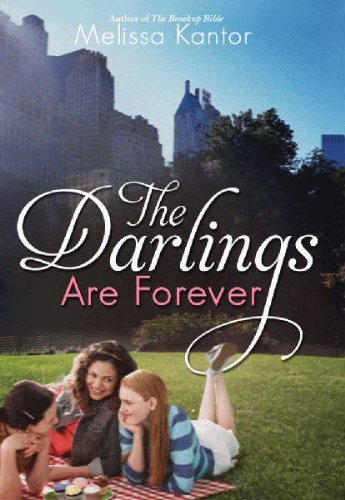
The Darlings Are Forever by Melissa Kantor

The Darlings Are Forever

What it's about (from Goodreads):
Jane, Victoria, and Natalya. Together, they are the Darlings. Best friends forever. They have matching necklaces, their own table at Ga Ga Noodle, and even a shared motto: May you always do what you’re afraid of doing.

When the friends begin freshman year at three different high schools in distant corners of New York City, they promise to live by their motto and stay as close as ever. The Darlings know they can get through anything as long as they have each other. But doing scary new things is a lot easier with your friends beside you. And now that the girls aren’t spending all their time together, everything they took for granted about their friendship starts to feel less certain. They can’t help but wonder, will they really be the Darlings forever?


What I learned: This is another teen book that focuses on friendships between girls and how they'll never change no matter what hardships happen. I didn't have the same kind of friendships as a teen, for whatever reason. I could blame it on going to a private school for sixth through eighth grades then going to the public high school where I didn't know too many people, or changing schools from fifth to sixth grade, from third to fourth grade, from the first half of third grade to the second half of third grade... it goes on. (Really. I went to a total of eight schools before college.) I'm sure that has something to do with it, but really, I just never had a group of close girlfriends or even one super close best friend. In different grades I had different best friends, but never one or two girls that I always spent the weekends with. Even now, I would say that I have a few "best" friends but none of them live in the same state as I do. I never really thought that I was missing out on anything: I had friends, of course. It's only been through books that I learned that apparently, close-knit friendships among girls is relatively common. The three girls in this book all end up going to different high schools and they go through some really rough times in their friendships, but they end up still being best friends. Perhaps it's due to my admitted laziness, but I found that changing schools meant the petering out of friendships (even when changing schools within the same town). It was all a matter of proximity. I think it's interesting to read about this type of friendship because it's something I never had, even though I don't miss it. Friendships can be awesome, but I also loved how this book explored some of the bad things that can happen in friendships (yes, even your best friends can peer pressure you).


If you've read The Darlings Are Forever, what did you learn?

Tuesday, May 3, 2011

Kat, Incorrigible by Stephanie Burgis

Kat, Incorrigible (Kat, Incorrigible, #1)

What it's about (from Goodreads):
Katherine Ann Stephenson has just discovered that she's inherited her mother's magical talents, and despite Stepmama's stern objections, she's determined to learn how to use them. But with her eldest sister Elissa's intended fiancé, the sinister Sir Neville, showing a dangerous interest in Kat's magical potential; her other sister, Angeline, wreaking romantic havoc with her own witchcraft; and a highwayman lurking in the forest, even Kat's reckless heroism will be tested to the upmost. If she can learn to control her new powers, will Kat be able to rescue her family and win her sisters their true love?

What I learned: This was a fun, lighthearted younger teen novel. I thought it took a while to get going and I'm glad there is at least two more in the series (the second is coming out in the U.S. in April 2012 and the third in April 2013) but by the end all kinds of things are happening. I love that Kat stood up for her family and what she thought was right no matter what. She was facing real and possibly evil magic as well as the ruin of her family, not to mention all the scoldings and punishment she would receive from her stepmother and sisters but she chose to keep fighting for what would make her sisters happy. I know that at age 12 I would not have been anywhere as brave as Kat and I definitely wouldn't have put my life on the line for my siblings. Kat understands that family is the most important thing, much more important than how Society perceives you. I learned that no matter how you feel about your family, you can't ever stop being related to them. You may try to hide the truth, but you can't escape it. I know a lot of people don't have good relationships with their family - and mine could be better in some aspects - but there's nothing you can do to completely sever yourself from them.


If you've read Kat, Incorrigible, what did you learn? How important is family to you?

Tuesday, April 26, 2011

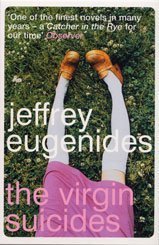
The Virgin Suicides by Jeffrey Eugenides

The Virgin Suicides

What it's about (from Goodreads):
This beautiful and sad first novel, recently adapted for a major motion picture, tells of a band of teenage sleuths who piece together the story of a twenty-year-old family tragedy begun by the youngest daughter’s spectacular demise by self-defenestration, which inaugurates “the year of the suicides.”


What I learned: This is a hard one for me. I'm not really sure what I learned from this book. I finished it several days ago - and have read another book in the meantime - and I'm still thinking about it. What really stuck with me was the unusual narration: it's in first person plural, written from the point of view of the girls' male contemporaries. The book is written two decades after the fact so that the boys aren't really boys anymore, but the tone feels more like teenage boys. This is, ostensibly, a story about five sisters who all committed suicide, but I really think that it's a story about how people perceive other families. I never got to know any of the sisters other than one or two unique qualities that defined them in broad ways (Cecilia was the strange one, Lux the slutty one (for lack of a better term), etc.). There was very little dialogue throughout the book and the reader is stuck inside the heads of the male classmates of the girls. These boys are almost creepily obsessed with the Lisbon family. I am still unsure how I feel about this book, but it's a little unsettling. If I had to pick one thing I learned from this book, it's that people think in very different ways. The boys' constant vigilance of the Lisbon house, girls, and the girls' actions is so different from anything I could imagine doing. Even other people in the neighborhood keep an eye on the house, seeing enough to tell stories decades later. No explanation is ever given for the girls' suicides and Mr. and Mrs. Lisbon's feelings and reactions are never clearly shown. I feel like this book is a commentary on modern life and I should understand it as an allegory or something, but I'm having a hard time seeing it.


If you've read The Virgin Suicides, what did you learn?

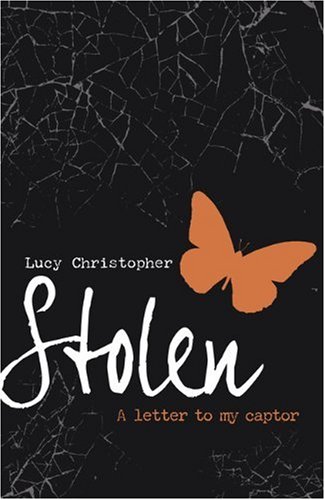
Stolen by Lucy Christopher

Stolen: A letter to my captor

What it's about (from Goodreads):
Sixteen year old Gemma is kidnapped from Bangkok airport and taken to the Australian Outback. This wild and desolate landscape becomes almost a character in the book, so vividly is it described. Ty, her captor, is no stereotype. He is young, fit and completely gorgeous. This new life in the wilderness has been years in the planning. He loves only her, wants only her. Under the hot glare of the Australian sun, cut off from the world outside, can the force of his love make Gemma love him back? The story takes the form of a letter, written by Gemma to Ty, reflecting on those strange and disturbing months in the outback. Months when the lines between love and obsession, and love and dependency, blur until they don't exist - almost.


What I learned: I want to visit the Australian outback. It sounds unbelievably gorgeous. I love books that have strange and unique settings where the land and weather are almost a character themselves (Tangerine by Edward Bloor is another example) and I wish there were more of them.
On a more serious note though, I would say that I learned that reality and emotions are incredibly difficult to analyze and understand. At the end of the book, Gemma knows that there are two realities, two ways of explaining her relationship with Ty. Both are completely true but neither is wholly true. I think that normal people often feel this dichotomy in a much less intense and horrifying way. There are so many ways to look at each small event in life and how we choose to look at something colors our emotions about it. Gemma can choose to focus on Ty's love for her and how he kept her safe, giving up his own freedom for her life and feel love for him. But she can also choose to focus on how Ty robbed her of her life, her friends and family, and the contentment she had at home and feel hate for him. The way we look at the world and our circumstances affects how we feel about things and I think it's important to acknowledge that even in the most difficult situations we still have a choice about our reactions.


If you've read Stolen, what did you learn?

Monday, April 25, 2011

The God Box by Alex Sanchez

The God Box

What it's about (from Goodreads):
How could I choose betwen my sexuality and my spirituality, two of the most important parts that made me whole?
High school senior Paul has dated Angie since middle school, and they're good together. They have a lot of the same interests, like singing in their church choir and being active in Bible club. But when Manuel transfers to their school, Paul has to rethink his life. Manuel is the first openly gay teen anyone in their small town has ever met, and yet he says he's also a committed Christian. Talking to Manuel makes Paul reconsider thoughts he has kept hidden, and listening to Manuel's interpretation of Biblical passages on homosexuality causes Paul to reevaluate everything he believed. Manuel's outspokenness triggers dramatic consequences at school, culminating in a terrifying situation that leads Paul to take a stand.


What I learned: Where do I even start? I grew up in a loving and wonderful evangelical Christian family. My entire extended family are conservative Christians and I grew up going to church and youth group every week. I was homeschooled for several years and went to a Christian school for three years. I was even a missionary kid for two years when I was young. What I'm trying to say is that from the first time I heard about the concept of homosexuality, I was taught that it was a sin. The Bible said it was wrong, just like getting drunk or being proud or lying. Just as I could be friends with people who lied (and I lied enough on my own) or got drunk, I could be friends with people who were gay. My parents treated a gay friend of mine in high school just like any of my other friends but still made it clear to me that he was sinning. I agreed with them, mostly because I couldn't imagine disagreeing with my parents on almost anything. In college my opinions started to change and I realized that I could decide things on my own, no matter how much I respected my parents and their beliefs. For the past two years, the idea of homosexuality and Christianity and how the two worked together - if they did - has been on my mind a LOT. This winter I asked my dad (whom I don't see that often since we live 5 states apart) why God said homosexuality was a sin. I understood everything else that the Bible condemned because it hurt someone - murder, cheating, lying, drunkenness, etc - but I couldn't see how being gay hurt anyone. My dad couldn't really answer the question. That really made me think. My dad is extremely knowledgeable about the Bible and has memorized more Bible verses than anyone I know (one of my friend's dads told me just a few weeks ago that my dad was a champion Bible verse reciter). Our bookshelves growing up were half full of kids' books and half full of Bible references, studies and other books about Christianity. All were read. I knew that if my dad didn't understand why homosexuality was a sin other than the Bible saying it was, there was no way I could.

Then I picked up The God Box. I'd heard about Alex Sanchez on and off through the many book blogs I read, but the description of this book caught my interest. I wanted to know how Manuel justified being gay and being a Christian. While I have to say that I didn't find the writing to be spectacular, I was blown away by the events of the book. Paul questions his desire to be with Manuel and wants so badly to do the right thing in God's eyes. He struggles to a heartbreaking degree with his feelings. I'm unquestionably straight but I could empathize a tiny bit with Paul because I too wanted to do what was right by God and what I thought was right in society. I knew all the Scripture passages addressed in the book and I loved Manuel's explanations of them. It is so hard to know exactly what the Bible is saying in all places. I always wondered why people focused so much on the Leviticus passage that said it is not right for a man to lay with a man as he does a woman when just a few verses away it says that no one should tattoo himself, yet I know many Christians with tattoos who say homosexuality is a sin. I could keep going on and on about the Bible and what verses people use to say homosexuality is wrong, but I'm not going to.

This book changed my mind once and for all about Christianity and being gay. I now have absolutely no hesitancy saying that there is nothing wrong with being gay. For years I felt a little bit guilty about condoning gays and lesbians because I thought it was wrong. I am so glad to have a firm stance that I can support with passages from the Bible and strong arguments to the commonly cited "anti-homosexual" verses. While the book I read is from the library, I'm seriously considering buying it so I can reference it in the future.


If you've read The God Box, what did you learn? (I hope everyone learned something from this book!)

Like Mandarin by Kirsten Hubbard

Like Mandarin

What it's about (from Goodreads)
: It's hard finding beauty in the badlands of Washokey, Wyoming, but 14-year-old Grace Carpenter knows it's not her mother's pageant obsessions, or the cowboy dances adored by her small-town classmates. True beauty is wild-girl Mandarin Ramey: 17, shameless and utterly carefree. Grace would give anything to be like Mandarin. When they're united for a project, they form an unlikely, explosive friendship, packed with nights spent skinny-dipping in the canal, liberating the town's animal-head trophies, and searching for someplace magic. Grace plays along when Mandarin suggests they run away together. Blame it on the crazy-making wildwinds plaguing their Badlands town. Because all too soon, Grace discovers Mandarin's unique beauty hides a girl who's troubled, broken, and even dangerous. And no matter how hard Grace fights to keep the magic, no friendship can withstand betrayal.


What I learned: Not everyone is content with who they are. I won this book from a giveaway (thank you, Shannon Messenger!) but I entered several giveaways for it. For one of the giveaways you were supposed to say who you wanted to be like in high school in your comment to enter. I sat back and thought about it. Who did I want to be like? Did I want to be like anyone? I thought back to high school and how I felt about myself and others during that time. Truthfully, I didn't want to be like anyone else. Sure, I was jealous of some girls' cars, or hair, or perfect skin, but there was no one I idolized anything like Grace does to Mandarin. I went to a Christian school for sixth through eighth grade and I remember in sixth grade there was a comment section on our report cards for a positive character trait our teachers felt we had displayed throughout the quarter. I got "contentment" twice. I vaguely remember my teacher comments saying something like "Katie feels comfortable in her own skin and doesn't worry about what others think about her." I was extremely proud at the time but I remember realizing in high school that really, I was just kind of a weird kid who didn't realize that other people thought she was different. I hated jeans and refused to wear them until seventh grade, choosing to wear knit pants and dresses instead. I also thought tennis shoes like Nikes were clompy and ugly so I wore what I thought were graceful little Keds for years. I was wearing jeans regularly by high school and had gotten over my hatred of normal shoes but I still had my own ideas of fashion and how to live life. I could characterize it now as unawareness, that I was blissfully ignorant of my own differences and shortcomings, but I like to think that I really was truly content with myself and who I was. I definitely wasn't perfect - believe me! - but I have wonderful parents who encouraged me to be myself (unlike Grace's mom who pushed her into pageants) and praised all of my accomplishments, and I truly think that had a huge impact on my self-image.


If you've read Like Mandarin, what did you learn? Are you - and have you always been - happy with who you are?

Saturday, April 2, 2011

It's Not Summer Without You by Jenny Han

It's Not Summer Without You (Summer, #2)

What it's about
(from Goodreads
): Can summer be truly summer without Cousins Beach?
It used to be that Belly counted the days until summer, until she was back at Cousins Beach with Conrad and Jeremiah. But not this year. Not after Susannah got sick again and Conrad stopped caring. Everything that was right and good has fallen apart, leaving Belly wishing summer would never come.
But when Jeremiah calls saying Conrad has disappeared, Belly knows what she must do to make things right again. And it can only happen back at the beach house, the three of them together, the way things used to be. If this summer really and truly is the last summer, it should end the way it started--at Cousins Beach.

What I learned: So many people have so much harder things happen to them growing up than I did. Belly's idol, friend and confidante and Jeremiah and Conrad's mother dies. I have been so extremely lucky that I have not had anyone close to me die in my lifetime so it's hard for me to imagine how absolutely horrible it is. Belly's pain and her relationship with Susannah's boys is raw and while the book doesn't mention much about schoolwork, I would guess that it took a backseat to her grief. As a former teacher, I realize that I probably should have been more sympathetic to what was going on in my students' lives. I knew when a family member had died, of course, and adjusted my expectations for that student accordingly, perhaps giving them more time to finish an assignment and overlooking a few missed homework assignments, but there is just so much stuff that goes on in people's lives that affect how they live. Not only teachers have to be aware of things like that but anyone who interacts with people. We never know what someone is going through and they may have a real reason why they are acting the way they are. I need to work on my kindness and understanding with all people, not just those who I know for sure are going through a hard time.


If you've read The Summer I Turned Pretty series, what did you learn? Did you experience grief at a young age?

Thursday, March 31, 2011

Party by Tom Leveen

Party

Wh
at it's about (from Goodreads): It's Saturday night in Santa Barbara and school is done for the year. Everyone is headed to the same party. Or at least it seems that way. The place is packed. The beer is flowing. Simple, right? But for 11 different people the motives are way more complicated. As each character takes a turn and tells his or her story, the eleven individuals intersect, and reconnect, collide, and combine in ways that none of them ever saw coming.

What I learned: I love books that take place over a short amount of time with the story told from different viewpoints. For some reason, this style really appeals to me. Of course, my real lesson from this book is much deeper. Almost all of the main characters are dealing with something really rough in their lives including the death of a parent and a brother who was severely injured fighting in the Middle East. The storyline that really stuck with me was Anthony Lincoln and Azize's. Anthony's older brother gave up a football scholarship to join the army and came back without his legs. Azize is Turkish and looks very Middle Eastern. Though Anthony starts it, both of them say some stupid things and big Anthony ends up beating Azize to a pulp in a haze of anger and misplaced retribution for his brother. What absolutely blew my mind was Azize didn't blame Anthony for it and lied to the cops and paramedics to keep him from getting in trouble. I also loved the internal conversation Anthony has with his older brother that shows he knows that what he did was wrong. It's beautiful. This isn't completely new to me, but the book really reinforced the idea to me that none of us know what other people are going through and what their motivations for their actions are. It's so easy to pass judgment on people who are angry or mean, but for all we know they might have just gotten really bad news or are taking care of a loved one in bad health. I know I need to work on making snap judgments of people whose actions I don't agree with or understand.


If you've read Party, what did you learn? Do you have as hard of a time as I do understanding people whose beliefs you don't agree with?

Pink by Lili Wilkinson

Pink
(one of my all-time favorite covers!)

What it's about
(from Goodreads): Ava has a secret. She is tired of her ultracool attitude, ultra-radical politics, and ultrablack clothing. She's ready to try something new—she's even ready to be someone new. Someone who fits in, someone with a gorgeous boyfriend, someone who wears pink.
Transferring to Billy Hughes School for Academic Excellence is the perfect chance to try on a new identity. But just in case things don't work out, Ava is hiding her new interests from her parents, and especially from her old girlfriend.
Secrets have a way of being hard to keep, though, and Ava finds that changing herself is more complicated than changing her wardrobe. Even getting involved in the school musical raises issues she never imagined. As she faces surprising choices and unforeseen consequences, Ava wonders if she will ever figure out who she really wants to be.


What I learned: Other people had and have a much harder time figuring out who they are than I did and do, at least in some ways. I was never unclear about my sexuality and I can't imagine how much more dramatic high school would have been had I been dealing with defining that alongside dating. There are so many people for whom identifying themselves on the sexuality spectrum is difficult and it's incredibly hard for people to go through. High school is full of so many other high-intensity situations to deal with. I'm so thankful that those four years were not a bad or hard period for me and I need to always be careful when I interact with others because I never know what they might be struggling with.


If you've read Pink, what did you learn? Have you ever questioned your sexuality? (Super personal question, I understand.)

Tuesday, March 29, 2011

Geek Love by Katherine Dunn

Geek Love

What it's about
(from Goodreads): The story of the Binewskis, a carny family whose mater- and paterfamilias set out–with the help of amphetamine, arsenic, and radioisotopes–to breed their own exhibit of human oddities. There’s Arturo the Aquaboy, who has flippers for limbs and a megalomaniac ambition worthy of Genghis Khan . . . Iphy and Elly, the lissome Siamese twins . . . albino hunchback Oly, and the outwardly normal Chick, whose mysterious gifts make him the family’s most precious–and dangerous–asset.
As the Binewskis take their act across the backwaters of the U.S., inspiring fanatical devotion and murderous revulsion; as its members conduct their own Machiavellian version of sibling rivalry, Geek Love throws its sulfurous light on our notions of the freakish and the normal, the beautiful and the ugly, the holy and the obscene. Family values will never be the same.

What I learned: This book is more than a little disturbing. There are drugs, incest, rapes, amputations, lobotomies, murders and all-out unhealthy relationships of all kinds. It's not a long book but it took me much longer than usual to get through because it's so dense, both physically (the type is smaller than most books and single-spaced) and content-wise. There is so much happening that it's sometimes hard to tell what the main plotline is.
I consider myself (as I'm sure many people do) quite normal and average. I'm of average height, weight, attractiveness and personableness. I'm pretty well-accepted in the world for who I am and I've never really felt uncomfortable with myself. To the characters in this book, I would be ignored and despised for being a "norm". Normal people from across the country desire abnormalities and get them in gruesome ways. It's so hard for me to imagine wanting to mutilate myself so that I could be set apart as not normal but this book almost accomplishes that. None of the Binewskis are at all self-conscious about their specialties, which include having flippers in place of arms and legs, being an albino hunch-backed dwarf and being a Siamese twin. Instead, they scoff at normal people and when it looks like a member of their own family might be normal, they almost get rid of him. I learned that not everyone who is different sees it as negative. I know that this book takes physical abnormalities to an extreme but I do think that it applies to people in general as well. This book made me think about the desire to be unique and the desire to be the same and how they are linked. If you are perfectly normal in every way, would you consider undergoing surgery to be given uniqueness? If you have something about yourself that is considered unusual, might you undergo surgery to be given normality? Geek Love made me think about how I feel about myself and define my self-worth as well as other people's.


If you've read Geek Love, what did you learn? Were you as creeped out by some parts of it as I was?

Wide Awake by David Levithan

Wide Awake

What it's about (from Goodreads): In the not-too-impossible-to-imagine future, a gay Jewish man has been elected president of the United States. Until the governor of one state decides that some election results in his state are invalid, awarding crucial votes to the other candidate, and his fellow party member. Thus is the inspiration for couple Jimmy and Duncan to lend their support to their candidate by deciding to take part in the rallies and protests. Along the way comes an exploration of their relationship, their politics, and their country, and sometimes, as they learn, it's more about the journey than it is about reaching the destination.

What Goodreads doesn't mention: Jimmy and Duncan are in high school.

What I learned from it: Wow, where to start. This book is beautiful because it takes conventional thought and turns it on its head. For example, I loved that Levithan made Christians the main supporters of gay people and loving all kinds of different people. It's so rarely seen and I often feel that Christians are portrayed negatively in all kinds of media, books not excluded. Janna's idea to give food to the kids of the opposition is wonderful and so Christ-like. I grew up in a quite conservative evangelical Christian home and was even a missionary kid. My entire extended family on both sides are outspoken Christians and I grew up believing very conservative values. As I've grown up I've changed some of my views but this book really challenged me in several ways to inspect my beliefs about loving people and Jesus. Reading this book, I learned (again) that it's hard to do the right thing. I learned that sometimes it's hard to even figure out what the right thing is. But most of all I learned that loving other people - the same way you love yourself - is a good place to start.


If you've read Wide Awake (which you should!), what did you learn? When do you think the United States will have an openly gay or lesbian president?