Search This Blog

Tuesday, April 26, 2011

The Virgin Suicides by Jeffrey Eugenides

The Virgin Suicides

What it's about (from Goodreads):
This beautiful and sad first novel, recently adapted for a major motion picture, tells of a band of teenage sleuths who piece together the story of a twenty-year-old family tragedy begun by the youngest daughter’s spectacular demise by self-defenestration, which inaugurates “the year of the suicides.”


What I learned: This is a hard one for me. I'm not really sure what I learned from this book. I finished it several days ago - and have read another book in the meantime - and I'm still thinking about it. What really stuck with me was the unusual narration: it's in first person plural, written from the point of view of the girls' male contemporaries. The book is written two decades after the fact so that the boys aren't really boys anymore, but the tone feels more like teenage boys. This is, ostensibly, a story about five sisters who all committed suicide, but I really think that it's a story about how people perceive other families. I never got to know any of the sisters other than one or two unique qualities that defined them in broad ways (Cecilia was the strange one, Lux the slutty one (for lack of a better term), etc.). There was very little dialogue throughout the book and the reader is stuck inside the heads of the male classmates of the girls. These boys are almost creepily obsessed with the Lisbon family. I am still unsure how I feel about this book, but it's a little unsettling. If I had to pick one thing I learned from this book, it's that people think in very different ways. The boys' constant vigilance of the Lisbon house, girls, and the girls' actions is so different from anything I could imagine doing. Even other people in the neighborhood keep an eye on the house, seeing enough to tell stories decades later. No explanation is ever given for the girls' suicides and Mr. and Mrs. Lisbon's feelings and reactions are never clearly shown. I feel like this book is a commentary on modern life and I should understand it as an allegory or something, but I'm having a hard time seeing it.


If you've read The Virgin Suicides, what did you learn?

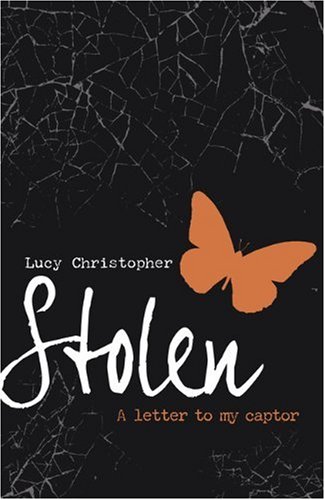
Stolen by Lucy Christopher

Stolen: A letter to my captor

What it's about (from Goodreads):
Sixteen year old Gemma is kidnapped from Bangkok airport and taken to the Australian Outback. This wild and desolate landscape becomes almost a character in the book, so vividly is it described. Ty, her captor, is no stereotype. He is young, fit and completely gorgeous. This new life in the wilderness has been years in the planning. He loves only her, wants only her. Under the hot glare of the Australian sun, cut off from the world outside, can the force of his love make Gemma love him back? The story takes the form of a letter, written by Gemma to Ty, reflecting on those strange and disturbing months in the outback. Months when the lines between love and obsession, and love and dependency, blur until they don't exist - almost.


What I learned: I want to visit the Australian outback. It sounds unbelievably gorgeous. I love books that have strange and unique settings where the land and weather are almost a character themselves (Tangerine by Edward Bloor is another example) and I wish there were more of them.
On a more serious note though, I would say that I learned that reality and emotions are incredibly difficult to analyze and understand. At the end of the book, Gemma knows that there are two realities, two ways of explaining her relationship with Ty. Both are completely true but neither is wholly true. I think that normal people often feel this dichotomy in a much less intense and horrifying way. There are so many ways to look at each small event in life and how we choose to look at something colors our emotions about it. Gemma can choose to focus on Ty's love for her and how he kept her safe, giving up his own freedom for her life and feel love for him. But she can also choose to focus on how Ty robbed her of her life, her friends and family, and the contentment she had at home and feel hate for him. The way we look at the world and our circumstances affects how we feel about things and I think it's important to acknowledge that even in the most difficult situations we still have a choice about our reactions.


If you've read Stolen, what did you learn?

Monday, April 25, 2011

The God Box by Alex Sanchez

The God Box

What it's about (from Goodreads):
How could I choose betwen my sexuality and my spirituality, two of the most important parts that made me whole?
High school senior Paul has dated Angie since middle school, and they're good together. They have a lot of the same interests, like singing in their church choir and being active in Bible club. But when Manuel transfers to their school, Paul has to rethink his life. Manuel is the first openly gay teen anyone in their small town has ever met, and yet he says he's also a committed Christian. Talking to Manuel makes Paul reconsider thoughts he has kept hidden, and listening to Manuel's interpretation of Biblical passages on homosexuality causes Paul to reevaluate everything he believed. Manuel's outspokenness triggers dramatic consequences at school, culminating in a terrifying situation that leads Paul to take a stand.


What I learned: Where do I even start? I grew up in a loving and wonderful evangelical Christian family. My entire extended family are conservative Christians and I grew up going to church and youth group every week. I was homeschooled for several years and went to a Christian school for three years. I was even a missionary kid for two years when I was young. What I'm trying to say is that from the first time I heard about the concept of homosexuality, I was taught that it was a sin. The Bible said it was wrong, just like getting drunk or being proud or lying. Just as I could be friends with people who lied (and I lied enough on my own) or got drunk, I could be friends with people who were gay. My parents treated a gay friend of mine in high school just like any of my other friends but still made it clear to me that he was sinning. I agreed with them, mostly because I couldn't imagine disagreeing with my parents on almost anything. In college my opinions started to change and I realized that I could decide things on my own, no matter how much I respected my parents and their beliefs. For the past two years, the idea of homosexuality and Christianity and how the two worked together - if they did - has been on my mind a LOT. This winter I asked my dad (whom I don't see that often since we live 5 states apart) why God said homosexuality was a sin. I understood everything else that the Bible condemned because it hurt someone - murder, cheating, lying, drunkenness, etc - but I couldn't see how being gay hurt anyone. My dad couldn't really answer the question. That really made me think. My dad is extremely knowledgeable about the Bible and has memorized more Bible verses than anyone I know (one of my friend's dads told me just a few weeks ago that my dad was a champion Bible verse reciter). Our bookshelves growing up were half full of kids' books and half full of Bible references, studies and other books about Christianity. All were read. I knew that if my dad didn't understand why homosexuality was a sin other than the Bible saying it was, there was no way I could.

Then I picked up The God Box. I'd heard about Alex Sanchez on and off through the many book blogs I read, but the description of this book caught my interest. I wanted to know how Manuel justified being gay and being a Christian. While I have to say that I didn't find the writing to be spectacular, I was blown away by the events of the book. Paul questions his desire to be with Manuel and wants so badly to do the right thing in God's eyes. He struggles to a heartbreaking degree with his feelings. I'm unquestionably straight but I could empathize a tiny bit with Paul because I too wanted to do what was right by God and what I thought was right in society. I knew all the Scripture passages addressed in the book and I loved Manuel's explanations of them. It is so hard to know exactly what the Bible is saying in all places. I always wondered why people focused so much on the Leviticus passage that said it is not right for a man to lay with a man as he does a woman when just a few verses away it says that no one should tattoo himself, yet I know many Christians with tattoos who say homosexuality is a sin. I could keep going on and on about the Bible and what verses people use to say homosexuality is wrong, but I'm not going to.

This book changed my mind once and for all about Christianity and being gay. I now have absolutely no hesitancy saying that there is nothing wrong with being gay. For years I felt a little bit guilty about condoning gays and lesbians because I thought it was wrong. I am so glad to have a firm stance that I can support with passages from the Bible and strong arguments to the commonly cited "anti-homosexual" verses. While the book I read is from the library, I'm seriously considering buying it so I can reference it in the future.


If you've read The God Box, what did you learn? (I hope everyone learned something from this book!)

Like Mandarin by Kirsten Hubbard

Like Mandarin

What it's about (from Goodreads)
: It's hard finding beauty in the badlands of Washokey, Wyoming, but 14-year-old Grace Carpenter knows it's not her mother's pageant obsessions, or the cowboy dances adored by her small-town classmates. True beauty is wild-girl Mandarin Ramey: 17, shameless and utterly carefree. Grace would give anything to be like Mandarin. When they're united for a project, they form an unlikely, explosive friendship, packed with nights spent skinny-dipping in the canal, liberating the town's animal-head trophies, and searching for someplace magic. Grace plays along when Mandarin suggests they run away together. Blame it on the crazy-making wildwinds plaguing their Badlands town. Because all too soon, Grace discovers Mandarin's unique beauty hides a girl who's troubled, broken, and even dangerous. And no matter how hard Grace fights to keep the magic, no friendship can withstand betrayal.


What I learned: Not everyone is content with who they are. I won this book from a giveaway (thank you, Shannon Messenger!) but I entered several giveaways for it. For one of the giveaways you were supposed to say who you wanted to be like in high school in your comment to enter. I sat back and thought about it. Who did I want to be like? Did I want to be like anyone? I thought back to high school and how I felt about myself and others during that time. Truthfully, I didn't want to be like anyone else. Sure, I was jealous of some girls' cars, or hair, or perfect skin, but there was no one I idolized anything like Grace does to Mandarin. I went to a Christian school for sixth through eighth grade and I remember in sixth grade there was a comment section on our report cards for a positive character trait our teachers felt we had displayed throughout the quarter. I got "contentment" twice. I vaguely remember my teacher comments saying something like "Katie feels comfortable in her own skin and doesn't worry about what others think about her." I was extremely proud at the time but I remember realizing in high school that really, I was just kind of a weird kid who didn't realize that other people thought she was different. I hated jeans and refused to wear them until seventh grade, choosing to wear knit pants and dresses instead. I also thought tennis shoes like Nikes were clompy and ugly so I wore what I thought were graceful little Keds for years. I was wearing jeans regularly by high school and had gotten over my hatred of normal shoes but I still had my own ideas of fashion and how to live life. I could characterize it now as unawareness, that I was blissfully ignorant of my own differences and shortcomings, but I like to think that I really was truly content with myself and who I was. I definitely wasn't perfect - believe me! - but I have wonderful parents who encouraged me to be myself (unlike Grace's mom who pushed her into pageants) and praised all of my accomplishments, and I truly think that had a huge impact on my self-image.


If you've read Like Mandarin, what did you learn? Are you - and have you always been - happy with who you are?

Saturday, April 2, 2011

It's Not Summer Without You by Jenny Han

It's Not Summer Without You (Summer, #2)

What it's about
(from Goodreads
): Can summer be truly summer without Cousins Beach?
It used to be that Belly counted the days until summer, until she was back at Cousins Beach with Conrad and Jeremiah. But not this year. Not after Susannah got sick again and Conrad stopped caring. Everything that was right and good has fallen apart, leaving Belly wishing summer would never come.
But when Jeremiah calls saying Conrad has disappeared, Belly knows what she must do to make things right again. And it can only happen back at the beach house, the three of them together, the way things used to be. If this summer really and truly is the last summer, it should end the way it started--at Cousins Beach.

What I learned: So many people have so much harder things happen to them growing up than I did. Belly's idol, friend and confidante and Jeremiah and Conrad's mother dies. I have been so extremely lucky that I have not had anyone close to me die in my lifetime so it's hard for me to imagine how absolutely horrible it is. Belly's pain and her relationship with Susannah's boys is raw and while the book doesn't mention much about schoolwork, I would guess that it took a backseat to her grief. As a former teacher, I realize that I probably should have been more sympathetic to what was going on in my students' lives. I knew when a family member had died, of course, and adjusted my expectations for that student accordingly, perhaps giving them more time to finish an assignment and overlooking a few missed homework assignments, but there is just so much stuff that goes on in people's lives that affect how they live. Not only teachers have to be aware of things like that but anyone who interacts with people. We never know what someone is going through and they may have a real reason why they are acting the way they are. I need to work on my kindness and understanding with all people, not just those who I know for sure are going through a hard time.


If you've read The Summer I Turned Pretty series, what did you learn? Did you experience grief at a young age?